
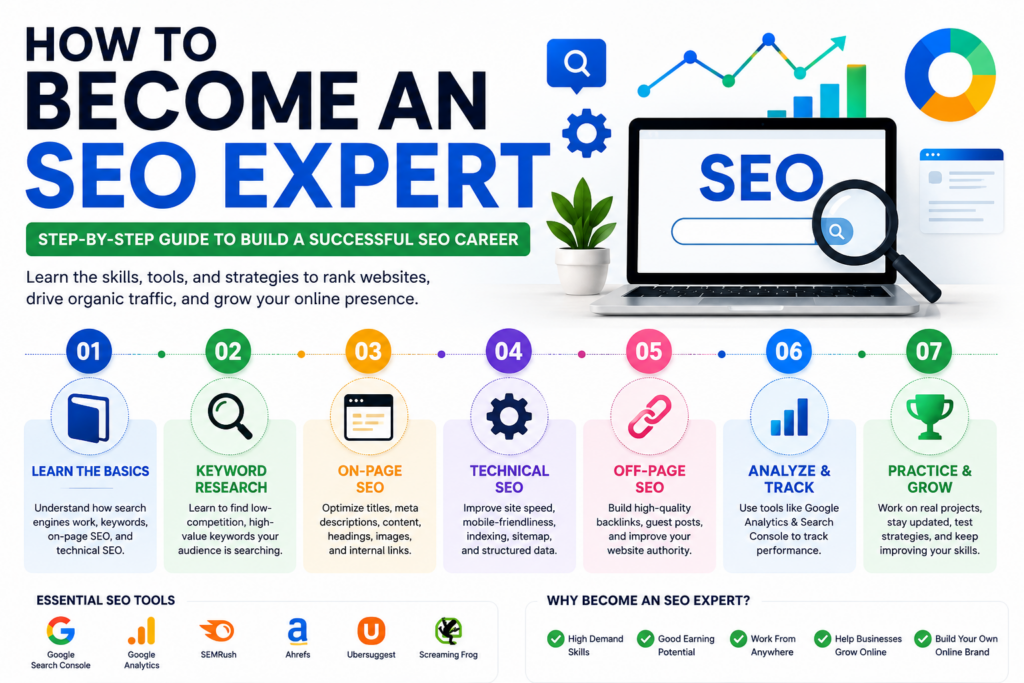
How to Become an SEO Expert is one of the most valuable skills you can learn in today’s digital world. As businesses continue investing in online marketing, the demand for SEO professionals is growing rapidly across Canada and worldwide. Whether you want to work for a company, become a freelancer, or start your own digital marketing agency, mastering SEO can open the door to a rewarding career.
Search Engine Optimization (SEO) is no longer just about adding keywords to a webpage. Modern SEO combines technical knowledge, content strategy, user experience, analytics, and artificial intelligence to help websites rank higher on search engines like Google.
In this complete guide, you’ll learn how to become an SEO expert, the skills you need, the best tools to use, and the step-by-step roadmap to building a successful SEO career.
Table of Contents
- What Is SEO?
- Why SEO Is a Great Career Choice
- Skills Every SEO Expert Needs
- Step-by-Step Guide to Becoming an SEO Expert
- SEO Tools You Should Learn
- Common Beginner Mistakes
- Career Opportunities
- Frequently Asked Questions
What Is SEO?
SEO (Search Engine Optimization) is the process of improving a website so it appears higher in search engine results. The better a website ranks, the more organic traffic it receives.
SEO helps businesses:
- Increase website traffic
- Generate qualified leads
- Improve brand visibility
- Build trust with customers
- Increase online sales
- Reduce advertising costs
Today, almost every successful business relies on SEO to attract customers online.
Why Learn SEO in 2026?
Digital marketing continues to grow every year, and SEO remains one of its most important pillars.
Businesses need SEO experts because they want to:
- Rank higher on Google
- Get more local customers
- Increase online revenue
- Compete with larger companies
- Build long-term organic traffic
Learning How to Become an SEO Expert gives you a skill that is valuable across nearly every industry.
Skills Every SEO Expert Should Master
SEO is a combination of technical knowledge and marketing strategy.
1. Keyword Research
Everything starts with understanding what users are searching for.
Learn how to:
- Find profitable keywords
- Analyze search intent
- Evaluate keyword difficulty
- Identify long-tail keywords
- Study competitors
Popular tools include:
- Google Keyword Planner
- Ahrefs
- SEMrush
- Ubersuggest
2. On-Page SEO
On-page SEO focuses on optimizing individual pages.
You’ll need to understand:
- SEO titles
- Meta descriptions
- URL structure
- Heading tags (H1-H6)
- Internal linking
- Image optimization
- Keyword placement
- Content optimization
3. Technical SEO
Technical SEO ensures search engines can properly crawl and index your website.
Important topics include:
- XML sitemaps
- Robots.txt
- Core Web Vitals
- Page speed
- Mobile optimization
- HTTPS security
- Canonical URLs
- Structured data (Schema)
4. Content Writing
Google rewards content that genuinely helps users.
An SEO expert should know how to create content that is:
- Helpful
- Original
- Easy to read
- Well structured
- Optimized naturally
- Focused on user intent
Quality content remains one of the strongest ranking factors.
5. Analytics
SEO without measurement is simply guessing.
Every SEO professional should understand:
- Google Analytics 4
- Google Search Console
- Traffic reports
- User behavior
- Conversion tracking
- Keyword performance
Data allows you to improve your SEO strategy over time.
Step-by-Step Guide: How to Become an SEO Expert
Step 1: Learn the Fundamentals
Before using advanced tools, understand how search engines work.
Study:
- Crawling
- Indexing
- Ranking
- Search intent
- Google’s ranking factors
Strong fundamentals make advanced SEO much easier.
Step 2: Practice on Your Own Website
The fastest way to learn SEO is through hands-on experience.
Create a simple website and practice:
- Writing blog posts
- Optimizing pages
- Improving page speed
- Building internal links
- Tracking rankings
Experience is more valuable than theory.
Step 3: Learn from Google’s Documentation
Instead of relying only on YouTube videos, study Google’s official documentation.
It explains:
- Helpful content
- Spam policies
- Search quality guidelines
- SEO best practices
Learning directly from Google helps you avoid outdated strategies.
Step 4: Understand User Intent
Modern SEO is no longer about stuffing keywords.
Instead, ask:
- What does the searcher want?
- What problem are they trying to solve?
- Which content best answers that question?
Understanding search intent is one of the biggest differences between beginners and experienced SEO professionals.
Step 5: Build Real Projects
The best SEO experts learn by solving real problems.
Practice with:
- Personal blogs
- Local business websites
- Friends’ websites
- Freelance projects
- Small eCommerce stores
Every project teaches something new and strengthens your portfolio.
By following these steps, you’ll build the knowledge and practical experience needed to become a successful SEO professional. More importantly, you’ll develop the confidence to optimize websites that deliver real business results.
Learning How to Become an SEO Expert is a journey, not a one-time task. Consistent practice, staying updated with Google’s algorithm changes, and continuously improving your skills will help you stand out in the competitive digital marketing industry.
Advanced SEO Strategies Every SEO Expert Should Learn
Once you understand the basics, the next step is mastering advanced SEO techniques that separate beginners from professionals. If you’re serious about How to Become an SEO Expert, these are the skills that will help you rank competitive websites and deliver measurable results.
Master On-Page SEO
On-page SEO remains one of the most important ranking factors because it helps search engines understand your content.
A well-optimized page should include:
Create SEO-Friendly Titles
Your title should:
- Include the primary keyword
- Be engaging
- Stay under 60 characters
- Encourage clicks
Example:
How to Become an SEO Expert: Complete Guide for Beginners
Write Compelling Meta Descriptions
A strong meta description should:
- Include the primary keyword
- Stay between 150–160 characters
- Encourage users to click
Although meta descriptions are not a direct ranking factor, they improve click-through rates.
Use Heading Structure Properly
Organize content using:
- H1 for the page title
- H2 for major sections
- H3 for subsections
- H4 when additional structure is needed
Proper headings improve readability for both users and search engines.
Optimize Images
Images should always include:
- Descriptive filenames
- ALT text
- Compressed file sizes
- Modern formats like WebP
Optimized images improve accessibility and page speed.
Internal Linking Strategy
Internal links help search engines discover content while guiding visitors through your website.
Benefits include:
- Better indexing
- Longer session duration
- Improved page authority
- Higher conversions
Every article should naturally link to related pages.
Off-Page SEO
Off-page SEO focuses on building your website’s authority beyond your own pages.
The most effective methods include:
High-Quality Backlinks
Backlinks remain one of Google’s strongest ranking signals.
Focus on earning links from:
- Industry blogs
- News websites
- Business directories
- Educational websites
- Relevant partners
Quality is always more important than quantity.
Guest Posting
Writing valuable articles for reputable websites helps you:
- Build authority
- Earn backlinks
- Reach new audiences
- Increase brand awareness
Avoid spammy guest-posting networks.
Digital PR
Modern SEO relies heavily on digital public relations.
Examples include:
- Original research
- Industry surveys
- Data studies
- Expert interviews
- Press coverage
These assets naturally attract backlinks.
Technical SEO Checklist
Technical SEO ensures your website performs well for both users and search engines.
Review these areas regularly:
Website Speed
Improve loading times by:
- Compressing images
- Using caching
- Reducing unnecessary scripts
- Choosing reliable hosting
Fast websites generally perform better in search.
Mobile Optimization
Most searches now happen on mobile devices.
Ensure your website:
- Uses responsive design
- Has readable text
- Loads quickly
- Offers simple navigation
Secure Website (HTTPS)
Every professional website should use SSL encryption.
HTTPS improves trust and protects user data.
XML Sitemap
An XML sitemap helps search engines discover your pages more efficiently.
Submit it through Google Search Console.
Robots.txt
This file tells search engines which pages they should and shouldn’t crawl.
Incorrect settings can prevent important pages from being indexed.
Structured Data (Schema)
Schema markup helps search engines understand your content and can improve search visibility with rich results.
Common schema types include:
- Articles
- FAQs
- Products
- Reviews
- Local Businesses
Local SEO
Local SEO is essential for businesses targeting customers in specific cities or regions.
To improve local rankings:
- Optimize your Google Business Profile
- Collect genuine customer reviews
- Keep business information consistent
- Create location-specific pages
- Build local citations
Local SEO is especially valuable for service businesses, restaurants, healthcare providers, and retail stores.
AI Is Changing SEO
Artificial intelligence is transforming how SEO professionals work.
Modern AI tools can help with:
- Keyword research
- Content outlines
- Meta descriptions
- Competitor analysis
- Content optimization
- Technical SEO audits
However, AI should support your work—not replace your expertise. Human review, creativity, and strategic thinking remain essential.
Understanding how AI fits into SEO is becoming an important part of How to Become an SEO Expert.
Essential SEO Tools
Professional SEO specialists rely on powerful tools to analyze websites and improve rankings.
Some of the most popular include:
Free Tools
- Google Search Console
- Google Analytics 4
- Google Keyword Planner
- PageSpeed Insights
- Google Trends
Paid Tools
- Ahrefs
- SEMrush
- Screaming Frog SEO Spider
- Moz Pro
- Surfer SEO
Learning these platforms will make your workflow faster and more effective.
Common SEO Mistakes to Avoid
Many beginners make mistakes that slow their progress.
Avoid these common issues:
- Keyword stuffing
- Publishing thin or duplicate content
- Ignoring search intent
- Buying low-quality backlinks
- Neglecting technical SEO
- Forgetting internal links
- Not monitoring analytics
- Using outdated SEO tactics
SEO is a long-term strategy. Consistency and continuous improvement produce better results than shortcuts.
Mastering these advanced techniques will bring you much closer to achieving your goal of How to Become an SEO Expert and delivering sustainable results for any website you manage.
SEO Career Opportunities
One of the biggest advantages of learning SEO is the variety of career paths available. Businesses of all sizes need professionals who can improve their online visibility and generate organic traffic.
After learning How to Become an SEO Expert, you can pursue careers such as:
- SEO Specialist
- Technical SEO Expert
- Local SEO Consultant
- SEO Content Strategist
- Digital Marketing Manager
- E-commerce SEO Manager
- SEO Analyst
- Freelance SEO Consultant
- SEO Agency Owner
Many SEO professionals also combine their expertise with PPC, content marketing, web development, and social media marketing to offer complete digital marketing solutions.
Freelancing as an SEO Expert
Freelancing is one of the fastest-growing career options in digital marketing. Thousands of businesses worldwide hire freelance SEO professionals to improve their website rankings.
As a freelancer, you can offer services such as:
- Website SEO Audits
- Keyword Research
- Competitor Analysis
- Technical SEO Fixes
- On-Page SEO Optimization
- Content Optimization
- Link Building
- Local SEO
- Monthly SEO Reports
Popular freelancing platforms include:
- Upwork
- Fiverr
- Freelancer
- PeoplePerHour
- Toptal
Building a strong portfolio and collecting positive client reviews will help you attract higher-paying projects.
Should You Get SEO Certifications?
While certifications are not mandatory, they can strengthen your credibility and help you learn industry best practices.
Recommended certifications include:
- Google Analytics Certification
- Google Digital Marketing Certification
- HubSpot SEO Certification
- SEMrush SEO Toolkit Course
- Ahrefs SEO Training
- Coursera Digital Marketing Courses
Remember, practical experience is often more valuable than certificates alone.
How Much Do SEO Experts Earn?
SEO salaries vary depending on experience, location, and specialization.
Typical career progression looks like this:
Beginner
- Learn SEO fundamentals
- Work on personal projects
- Build a portfolio
Intermediate
- Manage client websites
- Improve rankings
- Learn technical SEO
- Develop reporting skills
Advanced
- Lead SEO strategies
- Manage large websites
- Train teams
- Build or grow an agency
As your expertise grows, so does your earning potential.
Stay Updated With Google’s Algorithm Changes
Google updates its search algorithms regularly, which means SEO professionals must continue learning throughout their careers.
Stay informed by following:
- Google Search Central
- Industry blogs
- SEO conferences
- Webinars
- Case studies
- Trusted SEO communities
Continuous learning is essential because successful SEO strategies evolve over time.
Best Habits of Successful SEO Experts
Highly successful SEO professionals share several common habits:
- They test strategies instead of making assumptions.
- They focus on helping users first.
- They analyze data before making decisions.
- They stay updated with industry changes.
- They continuously improve their technical knowledge.
- They build long-term SEO strategies rather than chasing shortcuts.
These habits help deliver consistent and sustainable results.
Frequently Asked Questions
Can I Learn SEO Without a Degree?
Yes. Many successful SEO professionals are self-taught through online resources, practical projects, and continuous learning.
How Long Does It Take to Learn SEO?
Most beginners understand the basics within a few months. Becoming highly skilled usually requires consistent practice over a longer period.
Is SEO Still Worth Learning?
Absolutely. Businesses continue to invest in organic search because it delivers long-term traffic and strong returns compared with many paid advertising channels.
Can I Learn SEO for Free?
Yes. Google documentation, YouTube tutorials, blogs, and free online courses provide excellent learning resources.
Does AI Replace SEO Experts?
No.
Artificial intelligence helps automate repetitive tasks, but human expertise is still needed for strategy, creativity, technical decisions, and understanding user intent.
Professionals who know how to combine AI with SEO will have a significant advantage.
Final Thoughts
The digital marketing landscape continues to evolve, but SEO remains one of the most valuable and future-proof skills you can develop. Businesses will always need professionals who can increase visibility, attract qualified visitors, and improve online performance.
If you’re serious about How to Become an SEO Expert, start by learning the fundamentals, practicing on real websites, mastering on-page, off-page, and technical SEO, and staying current with industry trends. Build a portfolio, gain practical experience, and never stop learning.
Success in SEO doesn’t happen overnight, but with consistency and the right strategy, you can build a rewarding career, help businesses grow, and create long-term opportunities for yourself.
The journey of How to Become an SEO Expert is one of continuous improvement. Every website you optimize, every algorithm update you study, and every successful project you complete will bring you closer to becoming a trusted SEO professional.