
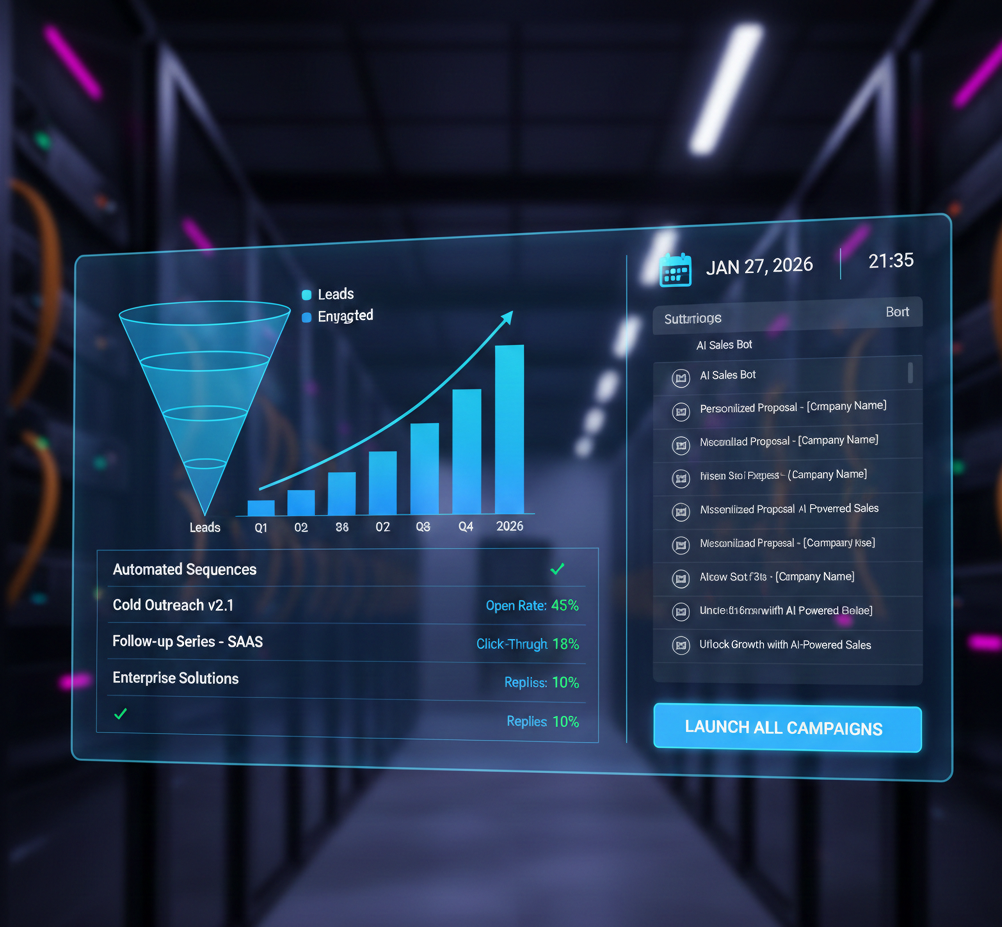
B2B sales teams are drowning in manual tasks. Between prospecting, follow-ups, and pipeline management, sales reps spend only 28% of their time actually selling, according to Salesforce’s State of Sales report. That’s where AI email automation comes in as a game-changer.
But here’s the thing – not all AI email automation is created equal, and some don’t exactly work the way you want them to. While some companies are seeing 45% higher response rates and 60% faster lead qualification, others are struggling with generic templates and poor deliverability. So what separates the winners from the also-rans?
After analyzing data from hundreds of B2B companies and talking to sales leaders who’ve successfully implemented AI email automation, we’ve identified the strategies and tactics that actually move the needle. Let’s explore what’s working in B2B sales automation right now.
The Current State of AI Email Automation in B2B Sales
The numbers tell a compelling story. Companies using AI email automationare outperforming their manual counterparts across every key metric:
- 45% higher response rates compared to traditional cold email approaches
- 60% reduction in time spent on email sequence creation and management
- 73% improvement in lead qualification accuracy
- 35% increase in pipeline velocity from initial contact to qualified opportunity
However, what’s really interesting is that these results aren’t coming from simply sending more emails. They’re coming from sending smarter emails.
Take the example of TechCorp, a mid-market SaaS company that switched to AI email automation last year. Before AI, their sales development reps spent 4-5 hours daily on email prospecting, achieving a 3.2% response rate. After implementing AI-powered personalization and behavioral triggers, they’re now seeing 14.7% response rates while spending just 1.5 hours on email-related tasks.
What’s Actually Working: Proven AI Email Automation Strategies
1. Behavioral Trigger-Based Sequences
The most successful B2B companies aren’t relying on time-based email sequences anymore. They’re using AI email automation that responds to specific prospect behaviors.
Website Activity Triggers
When a prospect visits your pricing page, that’s a buying signal that should trigger a specific email sequence. Companies using this approach see 67% higher conversion rates compared to generic follow-ups.
For example, when someone from a target account spends more than 2 minutes on a case study page, the AI automatically sends a personalized email within 4 hours referencing that specific case study and offering a similar use case in their industry.
Email Engagement Patterns
Advanced AI email automation platforms track not just opens and clicks, but engagement depth – how long someone spends reading an email, whether they forward it, or if they click multiple links. This data informs the next touchpoint strategy.
2. Hyper-Personalization at Scale
Generic “Hi [First Name]” emails are dead. Modern AI email automationcreates truly personalized messages by analyzing dozens of data points about each prospect.
Company Intelligence Integration
Top-performing teams use AI that automatically pulls in recent company news, funding announcements, executive changes, and industry developments to create contextually relevant outreach.
One software company increased their response rates by 89% by having their AI reference recent funding rounds or product launches in the opening line of their emails. The AI pulls this information automatically from multiple sources and incorporates it naturally into the message.
Role-Based Messaging
The same product solves different problems for different roles. AI email automation that understands this nuance significantly outperforms one-size-fits-all approaches.
For instance, when reaching out to CFOs about expense management software, the AI emphasizes cost control and ROI. When contacting operations managers about the same software, it focuses on workflow efficiency and team productivity.
Competitive Intelligence
Advanced AI systems monitor when prospects are researching competitors and adjust messaging accordingly. If someone downloads a competitor’s whitepaper, your follow-up email can address specific advantages your solution offers without directly mentioning the competition.
3. Predictive Send Time Optimization
Timing is everything in B2B sales, and AI automation is getting scary good at predicting when individual prospects are most likely to engage.
Individual Behavior Analysis
Rather than using industry averages, advanced AI analyzes each prospect’s email activity patterns. It knows that Sarah typically reads emails at 7 AM and responds around 9 AM, while Mike prefers afternoon emails and rarely engages before 2 PM.
Industry and Role Patterns
AI systems learn that healthcare executives tend to check emails early in the morning, while marketing professionals are more active in the afternoon. Manufacturing decision-makers often prefer mid-week outreach over emails on Mondays or Fridays.
Geographic and Time zone Intelligence
Intelligent AI automation doesn’t just adjust for time zones; it also understands regional communication preferences and business patterns.
4. Dynamic Content Optimization
The most successful B2B teams use AI that continuously tests and optimizes every element of their emails.
Subject Line Testing at Scale
Instead of traditional A/B testing that might take weeks to achieve statistical significance, AI runs continuous multivariate tests across thousands of combinations, identifying winning patterns in days rather than weeks.
Content Adaptation
Advanced systems analyze which types of content (case studies, product demos, industry reports) generate the best engagement from different prospect segments and automatically optimize future emails.
Call-to-Action Intelligence
AI determines whether “Book a Demo,” “Schedule a Call,” or “Learn More” works best for different prospect types and automatically inserts the highest-performing CTA.
Platform Analysis: What’s Working in Real B2B Environments
Enterprise Solutions
Salesforce Einstein
Large enterprises are seeing significant results with Salesforce’s AI email capabilities. The platform’s strength lies in its deep integration with existing CRM data, enabling sophisticated personalization based on complete customer histories.
One Fortune 500 technology company reported 52% improvement in email engagement after implementing Einstein’s predictive send time optimization combined with dynamic content personalization.
Outreach.io
Mid-market to enterprise B2B teams favor Outreach for its advanced sequence intelligence and conversation analytics. The platform’s AI analyzes email exchanges to identify buying signals and recommend next steps.
HubSpot AI
HubSpot’s email automation works particularly well for companies with complex, multi-touch nurturing campaigns. Their AI excels at lifecycle stage progression and content recommendation.
Specialized Cold Email Platforms
For B2B companies focused heavily on outbound prospecting and cold email automation, specialized platforms offer advanced AI email automation capabilities specifically designed for high-volume, high-touch outreach that converts prospects into qualified leads.
Smartlead – The Deliverability Leader
Smartlead has emerged as the top choice for companies requiring maximum scalability and deliverability in their AI email automation efforts. The platform’s unique approach to unlimited mailbox management sets it apart from competitors who limit sending capacity.
Key AI Features:
- Unlimited Mailbox Management: AI-powered domain rotation across unlimited email accounts prevents deliverability issues that plague other platforms
- Advanced Warm-up AI: Sophisticated algorithms that gradually increase sending volume while maintaining positive engagement signals through automated human-like interactions
- Behavioral Personalization Engine: Processes 50+ data sources per prospect to create hyper-relevant messaging that feels individually crafted
- Predictive Deliverability Optimization: Machine learning algorithms continuously monitor sender reputation and automatically adjust sending patterns to maintain 95%+ inbox placement
- Multi-Channel AI Coordination: Seamlessly orchestrates email, LinkedIn, and phone outreach for comprehensive account-based marketing campaigns
Real-World Performance: Companies using Smartlead report 35-50% higher response rates compared to generic AI email automation tools. One mid-market SaaS company increased their qualified lead generation by 340% within six months while reducing manual prospecting time by 75%. The platform’s AI-driven approach to sender reputation management has helped users maintain consistent deliverability even at scale.
Pricing and ROI: Starting at $39/month with unlimited email accounts and full AI features, Smartlead offers exceptional value for agencies and high-volume outreach teams. Users typically see positive ROI within 30-45 days due to immediate deliverability improvements and response rate increases.
Best For: B2B companies prioritizing cold outreach, digital marketing agencies managing multiple clients, and organizations requiring unlimited scaling without deliverability concerns.
Lemlist – The Creative Automation Platform
Lemlist differentiates itself through creative AI email automation features that combine traditional email with video personalization and multi-channel orchestration for memorable prospect experiences.
Innovative AI Features:
- Video Personalization AI: Automated video creation that incorporates prospect names, company logos, and personalized messages for higher engagement
- Multi-Channel Sequence Intelligence: AI coordination across email, LinkedIn, phone, and direct mail for comprehensive outreach campaigns
- Creative Content Generation: Machine learning algorithms that suggest and generate creative email formats, GIFs, and interactive elements
- Behavioral Trigger Automation: Advanced workflow engine that responds to prospect actions across multiple channels with contextually relevant follow-ups
- Performance Learning AI: Continuous optimization engine that learns from campaign results to improve future outreach effectiveness
Market Performance: Companies using Lemlist’s creative approach to AI email automation report 40-55% higher engagement rates, particularly with visual content and video messages. The platform excels in industries where creative differentiation matters, such as marketing agencies, design firms, and creative services.
Investment Details: Starting at $59/month with creative AI features included in higher tiers. Users typically achieve 250-400% ROI within 90 days through improved engagement and meeting booking rates.
Target Audience: B2B companies in creative industries, marketing agencies, and organizations where personalized video content can create significant differentiation and engagement.
Reply.io – The Analytics-Driven Platform
Reply.io positions itself as the intelligent email automation solution for data-driven B2B teams who need comprehensive analytics and performance optimization alongside their outreach efforts.
Analytical AI Capabilities:
- Performance Prediction AI: Machine learning models that forecast campaign performance before launch based on historical data and market patterns
- Advanced A/B Testing Engine: Automated testing of multiple email elements simultaneously with statistical significance calculations
- Behavioral Analysis AI: Deep analytics on prospect engagement patterns to identify optimization opportunities and buying signals
- ROI Attribution Intelligence: Advanced tracking that connects email outreach to revenue generation and customer lifetime value
- Competitive Benchmarking: AI analysis that compares your performance against industry standards and suggests improvement strategies
Data-Driven Results: B2B teams leveraging Reply.io’s analytical approach to AI email automation typically see 30-45% improvements in campaign performance through data-driven optimization. The platform excels for teams that want to understand the “why” behind their results and continuously improve their approach.
Cost Structure: Plans start at $60/month with advanced analytics features. Companies usually achieve 200-350% ROI within 75 days through systematic optimization and improved targeting.
Perfect Fit: Sales operations teams, revenue operations professionals, and B2B organizations that prioritize data-driven decision-making and continuous improvement in their email automation for sales.
Apollo – The All-in-One Solution
Apollo combines prospecting, AI email automation tools, and CRM capabilities in a unified platform designed for comprehensive B2B sales operations that need everything in one place.
Integrated AI Features:
- Intelligent Prospecting AI: Automated lead discovery and qualification using machine learning to identify ideal prospects
- Smart Sequence Automation: Behavioral trigger-based email sequences that adapt based on prospect actions and engagement
- Lead Scoring Intelligence: AI algorithms that prioritize prospects based on conversion probability and engagement signals
- Content Optimization Engine: Machine learning recommendations for subject lines, messaging, and call-to-action optimization
- Pipeline Forecasting AI: Predictive analytics that forecast deal progression and revenue outcomes from email campaigns
Unified Platform Benefits: Apollo’s strength lies in eliminating data silos between prospecting and AI email automation. Teams report 25-40% efficiency improvements from having integrated workflows that seamlessly move prospects from discovery to qualification to nurturing.
Platform Economics: Starting at $49/month with AI features included across tiers. The all-in-one approach typically delivers 180-280% ROI within 90 days through reduced tool costs and improved workflow efficiency.
Strategic Fit: Small to medium B2B companies seeking integrated prospecting and automated email marketing AI in a single platform, particularly those wanting to consolidate their sales technology stack.
Implementation Strategy: Getting AI Email Automation Right
Phase 1: Data Foundation (Weeks 1-2)
Clean Your CRM: AI is only as good as the data it processes. Before implementing AI email automation, audit your CRM for duplicate records, outdated information, and incomplete prospect profiles.
Define Your ICP: AI needs clear parameters to work effectively. Document your ideal customer profile including firmographics, technographics, and behavioral characteristics.
Set Up Tracking: Implement proper email tracking, website visitor identification, and social media monitoring to give your AI system comprehensive prospect intelligence.
Phase 2: Pilot Testing (Weeks 3-6)
Start Small: Begin with one specific use case – perhaps follow-ups to demo requests or nurturing for a specific industry vertical. This allows you to perfect your approach before scaling.
A/B Test Everything: Even with AI optimization, test different approaches to understand what works for your specific market and buyer personas.
Monitor and Adjust: AI systems improve over time, but they need guidance. Review performance weekly and provide feedback to refine the algorithms.
Phase 3: Scale and Optimize (Months 2-3)
Expand Use Cases: Once you’ve proven success with initial campaigns, gradually expand to additional sequences and customer segments.
Integrate Channels: Connect your AI automation with social selling, phone outreach, and content marketing for comprehensive account-based marketing.
Advanced Personalization: Implement more sophisticated personalization using intent data, technographic information, and competitive intelligence.
Real-World Results: Case Studies
Case Study 1: SaaS Startup Increases Pipeline by 340%
A Series A marketing automation startup implemented AI email automationto replace their manual outbound process. Here’s what they did:
- Used AI to analyze 50+ data points per prospect for hyper-personalization
- Implemented behavioral triggers based on website activity and email engagement
- Automated follow-up sequences with dynamic content based on prospect characteristics
Results after 6 months:
- Response rates increased from 4.2% to 18.7%
- Time to qualified opportunity decreased by 65%
- Sales pipeline increased by 340%
- SDR productivity improved by 150%
Case Study 2: Manufacturing Company Penetrates New Markets
A B2B manufacturing company used AI automation to expand into three new industry verticals simultaneously.
Their Approach:
- AI-powered industry research to identify pain points and messaging angles
- Automated competitive intelligence to understand market positioning
- Dynamic content that adapted messaging based on prospect’s industry and role
Results:
- Successfully entered all three target markets within 8 months
- Generated $2.3M in new pipeline from previously untapped segments
- Reduced market entry costs by 60% compared to traditional approaches
Case Study 3: Professional Services Firm Doubles Conversion Rate
A management consulting firm struggling with generic outreach implemented AI email automation focused on executive-level prospects.
Key Strategies:
- AI analysis of executive communication patterns and preferences
- Automated research integration pulling recent company developments
- Predictive send timing based on executive behavior patterns
Results:
- Email-to-meeting conversion rate increased from 12% to 24%
- Average deal size increased by 35% through better prospect qualification
- Sales cycle shortened by 3 weeks on average
Common Mistakes and How to Avoid Them
Over-Automation Without Human Oversight
The biggest mistake companies make is setting up AI email automationand walking away. Successful implementations require ongoing human oversight and optimization.
Solution: Schedule weekly reviews of AI performance, prospect feedback, and campaign results. Use this data to refine your approach continuously.
Focusing Only on Volume
Some companies think AI email automation is about sending more emails. The most successful implementations focus on sending better, more relevant emails.
Solution: Track quality metrics like response rates, meeting booking rates, and pipeline contribution rather than just volume metrics.
Ignoring Compliance and Deliverability
AI can help you send more personalized emails, but it can’t fix fundamental deliverability issues or compliance problems.
Solution: Ensure proper email authentication, maintain clean lists, and respect unsubscribe requests. Use AI platforms with built-in deliverability optimization.
Generic Implementation
Using AI email automation the same way as every other company won’t give you a competitive advantage. The magic happens when you customize AI to your specific market and buyer journey.
Solution: Spend time configuring AI parameters specific to your industry, buyer personas, and sales process. Generic setups produce generic results.
Measuring Success: KPIs That Matter
Primary Metrics
Response Rate Track both initial response rates and responses throughout your sequence. Successful AI email automation typically achieves 12-25% response rates for cold outreach.
Meeting Booking Rate
The ultimate goal is getting prospects on calls. Measure how effectively your AI sequences convert initial responses into scheduled meetings.
Pipeline Contribution
Track revenue generated from AI-automated email campaigns. This is your ultimate ROI metric.
Secondary Metrics
Time to Response
AI should accelerate your sales process. Measure how quickly prospects respond to automated sequences compared to manual outreach.
Sequence Completion Rate
Monitor how many prospects complete your entire automated sequence versus dropping out early.
Content Engagement
Track which AI-generated content gets the most engagement to inform future personalization strategies.
The Future of AI Sales Automation in B2B
The technology continues evolving rapidly. Here’s what successful B2B companies should prepare for:
Conversational AI Integration
The next wave will integrate AI email automation with conversational AI, enabling prospects to have back-and-forth conversations via email that feel completely natural.
Predictive Buyer Journey Mapping
Advanced AI will predict not just when to send emails, but exactly where prospects are in their buyer journey and what information they need to advance to the next stage.
Real-Time Personalization
Future AI email automation will personalize emails based on real-time factors like recent company news, market conditions, or competitive activities that happened hours before the email is sent.
Cross-Platform Intelligence
AI will connect email activity with social media engagement, website behavior, and even phone conversation insights to create comprehensive prospect intelligence.
Getting Started: Your 30-Day Action Plan
Days 1-7: Assessment and Planning
- Audit your current email process and identify pain points
- Define success metrics and baseline performance
- Research and select an AI email automation platform
Days 8-14: Setup and Configuration
- Implement your chosen platform and integrate with existing systems
- Set up basic sequences and personalization rules
- Configure tracking and analytics
Days 15-21: Testing and Optimization
- Launch pilot campaigns with limited prospect segments
- Monitor performance and gather initial feedback
- Optimize sequences based on early results
Days 22-30: Scale and Expansion
- Expand successful sequences to broader prospect segments
- Implement advanced features like behavioral triggers
- Plan for continued optimization and growth
Social Media Intelligence
The smartest B2B teams are connecting their email automation to LinkedIn and Twitter activity. When a prospect engages with their content on social media, it triggers a relevant email sequence that builds on that engagement.